Thursday, 15 November 2012

Lecture 5 - Subculture and Style - Helen Clark

This lecture looks at the relationship between Subculture and Style.  It follows Hebdige’s 
investigation into the topic and seeks to pose questions around the Postmodern sampling of 
subcultural style which jettisons the politics (which were an essential component of the 
original subcultures).  In doing so, it aims to encourage the consideration of subculture and 
style separately, and prompts the question “ Can contemporary subcultures be defined by 
the key texts used in this lecture?”

The lecture investigates these ideas principally through representations of subcultures in film 
and photography.  It uses Ian Bordens writings to consider Skateboarding, Parkour and Free 
running as performances of the urban environment: Nancy Macdonalds writings on Grafitti 
and the city, and McRobbie and Garbers ideas about girls and subcultures.


Subculture is separate from style. 
Subcultural Reactions 
Mix of original Photography and up to date documentary  footage.
Provides a good history of skateboarding and surfing. Taking the culture in the 1970's
into a professional sport. Re-use of existing spaces.

 Female and Male
He argues it gives the body something to do rather than passively consuming the city scape. 
Alternate to normal life in the city. Resisting the city, taking unique lines through the city.
 Substitute family

 Fight Injustice in the paris ghetto. Showing off their subcultures skills.
They steal from the rich and give to the poor - political
In this documentary they scale well known landmarks 
 Graffiti is claiming space. Putting your name on a Public Space.
Giving the city to the people
 He describes the leveling from different cultural groups. It erases the traditional 
borders of the way you look. Separating your identity from your own appearance.
She's saying female graffiti writers are judged on their looks.
Putting femininity in peoples faces. An ascertain of femininity. 
 US graffiti artist. Very politically motivated. She works in urban re generation.
She uses graffiti as a way of people claiming space back.
Most people that write about subculture are male, This was the case in 1977 

 In biker culture the girls are just an add on, who kind of ride along.
No competitiveness. This exaggerated masculinity and femininity in the biker culture.
No extreme styling, Morph of style. The girls and boys dress the same. Unthreatening.
The result of that is that mod culture fits into a wider culture. Doesn't attract too much attention.
Girls could have a status in their subculture unlike in biker community.
 Tension of Mods and Rockers.

Sting plays a character in the film. He drives off a cliff which ends the experience of the culture.

Hippy Girls were middle class. Uni education. Space for leisure which allows you to find yourself.
Time for personal expression before setting down.

 Kind of third wave Feminism. They covered themes that were quite serious like
rape domestic abuse etc...
 Its less about the music more about the protest. Its not about
musicianship its more about the political side.
Its about the female in the music industry 
 She died last year. She was one of the pioneers of the alternative scene who grew up along
side the the punk bands.
 Riot Grrls are involved in political actions. They produce fanzines.
They have reproduced the punk DIY aesthetic. Dealing with real issues. 
 To be a subculture there has to be some kind of political causes.
Gives women a voice in the music industry.

Example of the style without the subculture and the politics. 
Easy consumption of the target audience. GIRL POWER. offers little empowerment
in real life. The lyrics of songs are terrible and dont even make sense. Eliminating the power. 
Distortion of the punk movement in the media.
Offensive lyrics and style which is different to normal people.
 Elements of the cultures are turned into commodity form. Everything
started turning into mass produced items. Ruining the subculture.
Style overtakes subculture.
Makes the punk subculture non threatening. They have been
represented unthreatening.
Functional object becomes an accessory. Piercing clothing and skin in a
rebellious statement. The subculture was quickly consumed by public. 
The hoodie becomes an object of demonised object. Starts as a protective piece of clothing
Hiding from CCTV. And belonging to a group unidentifiable. 
The coat starts off a commodity for the rich, then it slowly goes through the classes. 
Girls were a small part of the teddy boy culture. If they were out on the street
they might get pregnant. 

 Starts with the mod culture, then deviated.

Right of passage movie about his journey. 


He beats milky up. He cant deal with being friends with
someone of a completely different race. Working class Conflict.

Hand Out Subculture and Style

Further Research

• McRobbie, Angela (1977) Girls and Subcultures
• Hebdige, Dick (1979) Subculture: the meaning of Style
• Borden, Ian (2001) Skateboarding, Space and the City
• Mc Donald, Nancy (2001) The Graffiti Subculture
• DeMello, Margo (2000) Bodies of inscription: a cultural history of the modern tattoo 
community
• Ganz, Nicholas (2006) Graffiti Woman, Thames and Hudson
• Gelder, Ken (2005) The Subcultures Reader
• Muggleton, David (2003) The Post Subcultures Reader

Filmography

• This is England (2006) Shane Meadows
• Quadrophenia (1979) Frank Roddam 
• Dogtown and Z Boys (2001) Stacey Peralta
• Jump London/ Jump Britain (2005) Mike Christie
• Yamakasi - Les samouraïs des temps modernes (2001) Luc Besson From the Postsubcultures Reader

Is it possible to work within the existing limitations of ‘subculture’, or has the term exhausted 
it’s usefulness? Can attempts at reconceptualisation adequately capture the experience of 
fragmentation, flux and fluidity that is central to contemporary youth culture? And to what 
extent does this involve challenging of past theoretical orthodoxies about spectacular 
subcultural styles? By addressing such questions, through a wide variety of international 
case studies, this reader helps chart the emergence of a new agenda for the study of youth.
(Muggleton and Weinzierl:2003:3) 


NAME Choi Seang Rak BORN 1971 OCCUPATION Academic LOCATION Seoul, South Korea 

AVATAR NAME Uroo Ahs AVATAR CREATED 2004 GAME PLAYED Lineage II HOURS PER WEEK 
IN-GAME 8 CHARACTER TYPE Dwarf Warsmith SPECIAL ABILITIES Craft siege weapons, 
whirlwind in battle


Photo from Alter Ego by Robbie Cooper, 2007


Thursday, 8 November 2012

Lecture 4 - Cities & Film - Helen Clark

The lecture looks at :
•The city in Modernism
•The possibility of an urban sociology
•The city as public and private space
•The city in Postmodernism
•The relation of the individual to the crowd in the city

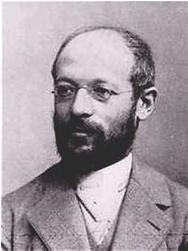
Georg Simmel (1858-1918)

•German sociologist
•Writes Metropolis and Mental Life in 1903
•Influences critical theory of the Frankfurt School thinkers eg: Walter Benjamin, Kracauer, Adorno and Horkheimer


Dresden Exhibition 1903

•Simmel is asked to lecture on the role of intellectual life in the city but instead reverses the idea and writes about the effect of the city on the individual

How the body functions in a new space, that envolves things like traffic.
How u negotiate the environment and other people and how this effects the identity.
•Herbert Bayer Lonely Metropolitan 1932

Urban Sociology
Lewis Hine (1932)

•the resistance of the individual to being levelled, swallowed up in the social-technological mechanism.
Vulnerable body in relation to the vastness of the city. Relationship with the body to the city. 
He is swallowed up by the city so to speak.
•— Georg Simmel The Metropolis and Mental Life 1903

Architect Louis Sullivan (1856-1924)

•creator of the modern skyscraper,

Form always follows function.
•an influential architect and critic of the Chicago School
•mentor to Frank Lloyd Wright,
•Guaranty Building was built in 1894 by Adler & Sullivan in Buffalo NY

Organic decoration influenced by the arts and crafts movement. 
The building is divided into four zones. Reflective and organising of the body. The building dictates how the person moves through space using the building.
Represented the american dream where everything is up for grabs. People migrating into factories etc.
Commissioned to photo the plant for a huge campaign. Typical modern aesthetic in the photos.
Celebration of the shape of injury. Abstract imagery.
Working this way to produce the most amount of goods. In a affordable way.
Stars and Directs the film. Lots of chaos in the film, underlying comment on the aspect of modernity.
The body is swallowed by the machine. He deals with a political message in a humorous way.

Looking at the ideal society and the figure on the street.
He is a upper class gentlemen, strolling around the city. Idealess is put across as creativity.
sitting back watching the social interaction and making notes. Art should capture aspects of the city.
He thinks about the flaneur and he applies the ides to his own life as a kind of self portrait
How is the city used by people, how can it be arranged to maximise the experience.
Outside and inside simultaneously. - encourages you to purchase things. Not stopping your
consumerist desires.
Use of the camera to document their experience of the city.
Feminists investigate that a Flaneuse is a female.

Isolated woman dwarfed by the environment.
She records the mans every move and writes a diary of his behaviour. Kind of
stalking love story.
The architecture of the city envites a certain relationship. Your in a kind of maze
that allows you to get lost but be in a fixed defined space.


Record of photographic images made by a mixture of professionals and ordinary people also.
Democracy of photographs. 3000 plus photos.
Almost identical, similar buildings, exactly the same camera angle and a similar
facial expression.
1930's - he was a press photography in lower east New York. He always appears
at the murder scene. Only photographer with a police radio. The Nake City
They turned his work into a tv series / book. You see the investigation of the murder of a young model.
Set in the same era as WeeGee. Same styling but set in a contemporary LA police Dept.

Mix of the Past and the Future. Typical Post Modernist Style.

Faces represent an interior life. Hard to Pin Down...
Its ok to do this if its for arts sake. If the image was used for advertising he could of
done something about it.
Photographing on the sly with a concealed camera. Nice exposure of interior city life.
Representation of the city as a bombardment of information. Saturated colour and depth of field is used.
None of the people are the subject of the image.
People are just looking on to the drame in a normal sense....Not a big deal.
Theere is no person who can remain detached from the city. The destruction of the twin towers was the destruction of the American Dream.

Turner Prize 2008. Uses footage of 9/11 backwards so its rebuilt.

Hand Out


The lecture looks as the city as represented on and in film: through 
both photography and in various film types (experimental silent 
cinema, contemporary video works, a Chaplin comedy, Film Noir and 
Cult Classics). In doing so it looks at the differences in the 
representation and theorization of urban existence in first Modernism 
and then Postmodernism.
This inevitably involves consideration of the body in the city.  
Beginning with Simmel, as the Frankfurt School do, the figure of the 
flaneur is explored in art, literature and in feminist theory.
To investigate or illustrate some of these ideas, the lecture offers 
readings of photographers like Sophie Calle, Joel Meyerwitz and 
Phillip Lorca di Corcia whose work can be critically investigated 
through theory.
Finally the lecture proposes a post Postmodern city where the body, 
the psyche and the city are intertwined by the threat (whether 
experienced or internalised) of terrorism. Lastly looking at how this 
may be represented through photography, film and video, the lecture 
considers Citizen Journalism as a visual response which 
democratises image making and starts to define the experience of the 
city.
We need to remember that photography established itself in a period 
when the growth of the city and industry had already provoked a 
formidable literature and art in response to the increasing influence of 
urban areas, especially cities such as London, Paris and New York. 
Photography takes it place in this process, but it does so in a 
consistently active sense, simultaneously responding to the variety 
and multiplicity of urban life and experience, and to the question s of 
how urban space was to be perceived and represented. In brief, its 
underlying response has been in relation to the visual complexity of a 
city as both an image and an experience. 
(Clarke:1997: 75)Biblography
•Cityscapes of modernity: critical explorations by David Frisby
•Art of America: Modern Dreams (2/3) Andrew Grahame Dixon BBC 
4 21/11/11
•De Grazia, Victoria (2005), Irresistible Empire: America's Advance 
Through 20th-Century Europe, Cambridge: Belknap Press of Harvard 
University Press
•Susan Buck-Morss, The Dialectics of Seeing: Walter Benjamin and 
the Arcades Project (1989)
•Grahame Clarke (1997) The Photograph, Chapter 5 The city in 
photography
•http://hereisnewyork.org/
•Art in the Age of Terrorism, Terrible Beauties, Bernadette Buckley, 
(2005)
Fredrick Jameson Postmodernism, or, The Cultural Logic of 
Late Capitalism Verso, 1991

Monday, 5 November 2012

Panopticism - Richard Seminar

Characteristics of the Panopticon

Being Watched
Isolation
Confinement
Surveillance
Psychological Effect
Psychological Discipline - not physically hurt

Panopticism takes the panopticons characteristics and uses these methods as a form of social control. Its a method of organising society. For panopticism to work there needs to be a clear visible reminder of authority.

Modern Discipline - Self Regulatory discipline

Examples of Panopticism

CCTV - constant reminder of the government.

Speed Cameras

Google / Internet - everything you search for is logged and recorded.

Open Plan Offices

The gaze is similar to panopticism, as you are constantly being watched and judged by society you will change your mental and physical self to fit in with what society wants.

The mass media is effectively a ginat panopticon that effects everyone.

Sunday, 4 November 2012

Perrier Advert Analysis STUDY TASK 2


I decided to look at Perrier's advertising iAd app created by the french studio Ogilivy. In 2010 Perrier launched its limited edition campaign with Dita Von Teese to accelerate sales and to make the brand sexy again and recruit younger consumers.

The app is an interactive video website giving the viewer the chance to follow Dita Von Teese around the Perrier mansion playing seduction games. The advertising techniques quite obviously use Dita in a sexual manner to sell their product. There are several games from a strip tease to a game of sexy dice. In this game depending on what you roll Dita will do the forfeit, it could be anything from licking her lips to squeezing her breasts. If you are lucky enough to roll a 'Double Perrier' Dita takes her dress off and pours a bottle of Perrier all over her breasts. Coward mentions, "In this society, looking has become a crucial aspect of sexual relations, not because of any natural impulse, but because it is one of the ways in which domination and subordination are expressed." (pg 34) Here they portrayed Dita to be submissive to the male, they have created a kind of a fantasy game for the male, which increases interest in the product. They are playing with unconscious sexual urges and desires.

“The camera in contemporary media has been put use as an extension of the male gaze at women on the streets. Here, men can and do stare at women,” (pg 33) The advert definitely relates to what Coward is saying in quite a literal sense, one of the games allows you to photograph Dita in the darkroom which is blatantly for the men’s pleasure only, once again showing dominance and a sense of power, whilst the female is powerless living in a mans world.

Even though the advert is highly sexual and quite obviously targeted at men, the campaign will entice women too. Coward writes, “women identify with similar images. A narcissistic Identification is supposed to take place; women looking at glamorous and highly sexualised images of other women because these images are meant to function like a mirror. The Image like a mirror reflects back to women their own fascination with their own image.” This means that the advert works on two different levels, it obviously seduces men in a sexual way and also plays with women’s emotions on their own image. This creates some pressure on women in today’s society; they are constantly seeking perfection playing up to what men want.

“Every minute region of the body is now exposed to this scrutiny by the ideal. Mouth, hair, eyes, eye lashes, nails, fingers, hands, skin, teeth, lips, cheeks, shoulders, arms, legs, feet,” (pg 38) what Coward says can be seen in the campaign, in the dice game you have the chance to see Dita stroke, lick or squeeze different body parts, once again playing up to the males fantasy, this is giving the illusion that women are easy to control and can be manipulated to do what men see fit. But this relationship with women is allot different in real life to on screen, in reality men are quite intimidated by women, Coward says, “this so-called aesthetic appreciation of women is nothing less than a decided preference for the ‘distanced’ view of the female body. The aesthetic appeal of women disguises a preference for looking at women’s bodies, for keeping women separate, at a distance, and the ability to do this. Perhaps this sex-at-a-distance is the only complete secure relation which men can have with women. Perhaps other forms of contact are too unsettling.” The advert allows the viewer to build this kind of relationship making him feel secure thus drawing him into the experience, they have used these seductive techniques to make men feel more comfortable and at ease.

Reference : Coward, R., 'The Look', in Thomas, J. (ed.) (2000), Reading Images, Basingstoke: Palgrave, pages 33-39 


http://thisisnotadvertising.wordpress.com/2012/01/16/ogilvy-france-for-perrier-dita-von-teese-mansion-a-sexy-case-study/